
Tennis Strings Explained – Polyester, Synthetic Gut, Multifilament & Hybrids
Choosing the right tennis string can make a huge difference to how your racket performs. Strings affect power, spin, control, comfort, and feel, and the best choice depends on your playing style, ability level, and physical needs.
At Nottingham Tennis Racket Stringing we stock a wide range of strings and can help you choose the best setup for your game.
Below is a guide to the most common types of tennis strings and how they can be combined.
Polyester – Multifilament – Synthetic Gut – Hybrid Setup
Polyester Tennis Strings, Co Poly(Monofilament)
Co-polyester strings, often simply called poly, are the most popular strings for modern players who generate their own power and spin.

Benefits
- Excellent control on big swings
- Great spin potential
- Very durable
- Popular with intermediate and advanced players
Drawbacks
- Firmer feel than other strings
- Can lose tension relatively quickly
- Not always ideal for players with arm discomfort
Many modern poly strings are designed to snap back after contact with the ball, which helps generate extra spin.
Shaped vs Round Poly
Benefits
- Edged or shaped profile (square, pentagonal, etc.)
- Designed to grip the ball more
- Increases spin potential
Drawbacks
- Smooth surface
- Slides across other strings more easily
- Often produces better snap-back and consistency
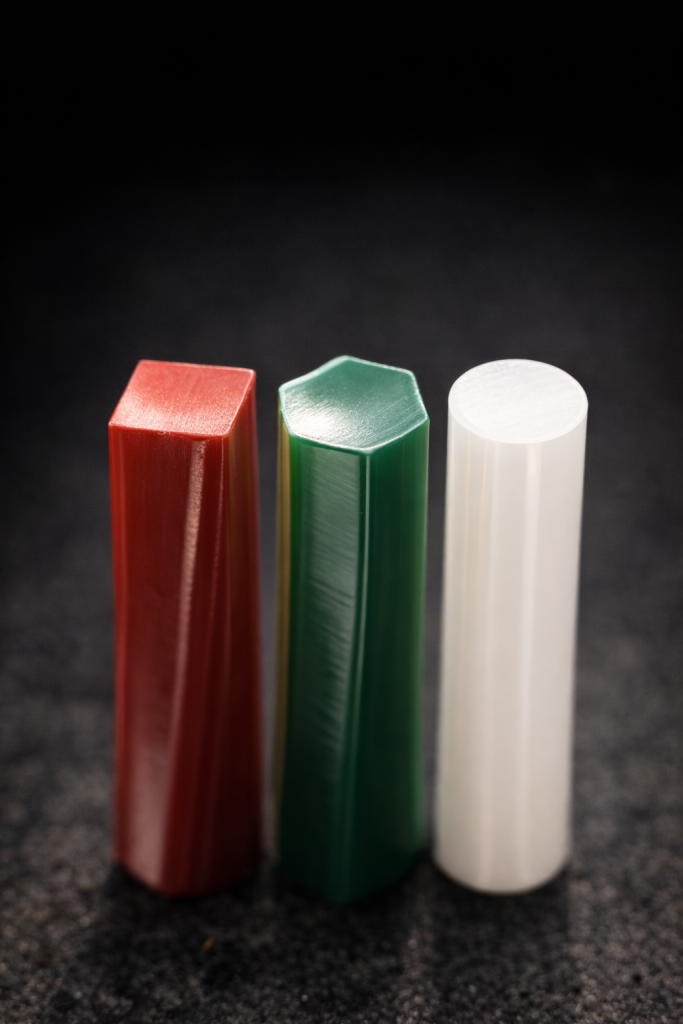
Both types have their place, and many players combine them in hybrid setups.
Multifilament Tennis Strings(Multi)
Multifilament strings are designed to mimic the performance of natural gut by using hundreds or thousands of microfibres bonded together.
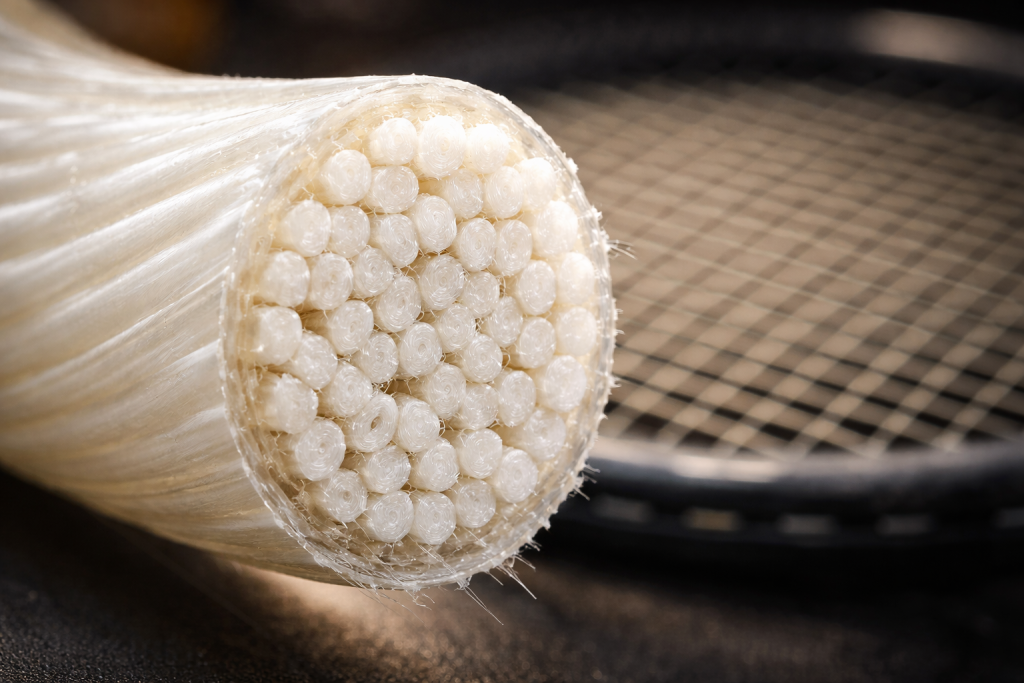
Benefits
- Extremely comfortable
- Excellent power
- Very arm-friendly
- Ideal for players with tennis elbow
Drawbacks
- Less durable
- More expensive than synthetic gut
- Can move around in the string bed more
Multifilaments are particularly popular with: Players seeking comfort, veterans and recreational players and players recovering from arm injuries
Synthetic Gut Tennis Strings(Sync)
Synthetic gut is one of the most versatile and affordable string types.
Benefits
- Comfortable feel
- Good all-round performance
- Excellent value
- Suitable for beginners and club players
Drawbacks
- Less spin than poly
- Not as durable for heavy hitters
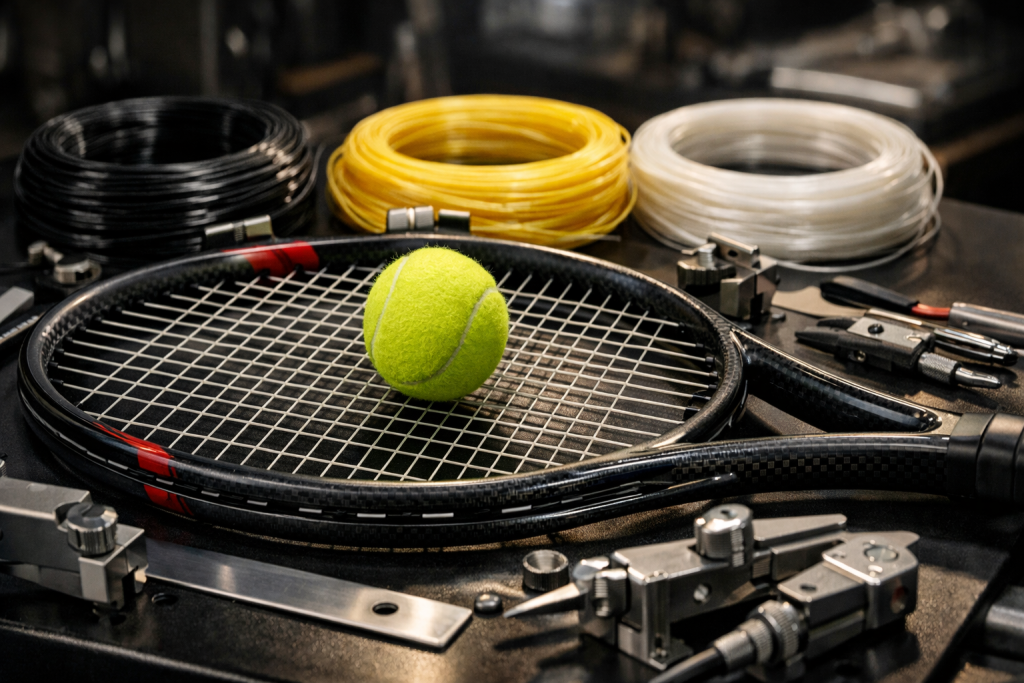
Synthetic gut is often used as a cross string in hybrid setups to soften the feel of polyester mains.
Hybrid String Setups
Hybrid stringing combines two different types of strings in the same racket. This allows you to balance spin, control, power, durability, and comfort.
A popular modern setup is using:
- Shaped poly in the mains
- Round poly in the crosses
This works because:
- The shaped mains grip the ball for spin
- The round crosses allow the mains to slide and snap back more easily
The result is often excellent spin with improved consistency.
This setup is often recommended for players who want:
- Spin and control from poly
- Maximum comfort from the multifilament
Typical setup:
- Poly mains
- Multifilament crosses
This hybrid is popular for players who:
- Hit with spin
- Want arm-friendly performance
- Have previously experienced elbow pain
Another common hybrid is:
- Poly mains
- Synthetic gut crosses
This setup provides:
- Good control and spin from the poly mains
- A softer feel from the synthetic crosses
- More comfort than full polyester
This is a great option for club players who want poly performance without the harsh feel.